Follow us

Pages

Thursday, 31 October 2013

FAA to Allow Most Gadget Use During Takeoff and Landing

Plane
The days of turning off your iPod or putting away your Kindle during takeoff and landing will soon be over.
The Federal Aviation Administration (FAA) announced Thursday that it will allow airlines to ease restrictions on portable electronic devices during all phases of flight. A cross-industry panel including airlines representatives, aviation manufacturers, passengers, pilots, flight attendants and officials from the mobile technology industry determined that most commercial airplanes "can tolerate" radio interference from light-weight electronic devices such as tablets, smartphones and e-readers.
"These guidelines reflect input from passengers, pilots, manufacturers and flight attendants, and I look forward to seeing airlines implement these much anticipated guidelines in the near future,” Transportation Secretary Anthony Foxx said an FAA release.
The FAA appointed the panel to look into the matter in August 2012, and the panel came back with recommendations about a month ago.
The changes will not take effect immediately, though. Each airline must conduct tests to "verify the tolerance" of its fleet. At that point, the airline can allow passengers to use most electronic devices throughout flights.
This doesn't mean, however, that you'll be able to make phone calls. Users must still disable the cellular connection of their devices, or put them in "airplane mode," throughout the flight. In addition, users must still turn off and store heavier devices, such as laptops, during takeoff and landing.
During conditions such as low visibility, flight crews could still to ask passengers to turn off light-weight PEDs because certain airplane equipment "may not be proved PED tolerant." The FAA estimates that these instances will be rare, occurring in about 1% of flights.

These Robots Can Teach Little Kids to Code

These Robots Can Teach Little Kids to CodeThere's perhaps no better way to learn than through play, and that's how Play-i envisions children learning computer programming. The company is close to achieving a crowdfunding goal that will enable production of Bo and Yana, two shiny little robots whose actions can easily be programmed by tots. The initiative could even help the U.S. regain some lost ground in computer science education.
Play-i on Monday launched a crowdfunding campaign to support the development of robots designed to teach young students the fundamentals of computer programming through play.
Play-i is working on two robots, Bo and Yana, that can help teach kids as young as five basic computer science skills. The robots come ready to play out of the box, and children can interact with them using a tablet or smartphone.
Children can use the touchscreen to string together a series of commands that will direct the robot. Different sequences might allow it to sing a song or whir like an airplane. Eventually, kids can use visual programs Scratch and Blockley to create their own code.
Closing the Gender Gap
Play-i made sure the product appealed to both boys and girls, said Vikas Gupta, cofounder of Play-i.
Children in elementary school often have equal interest in science and technology fields, but by the time they get to middle school, boys show more interest. The Play-i team worked with test groups and researchers to determine how to create a product that would appeal to girls not only at a young age, but also as they grew older.
The robots focus on languages not driven by syntax, as well as music, stories and animation that stimulate kids and help them warm up to the product, said Gupta.
So far, the company has received backing from major tech players including Google Ventures, and its crowdfunding campaign seems to be successful, as well -- by Tuesday afternoon, it had reached more than US$176,000 of its $250,000 goal with 29 days remaining in the campaign.
Backers of the crowdfunding campaign can purchase Yana for $49, Bo for $149 or both for $189. Retail prices will be higher following the launch, the company said. Play-i expects to start shipping in the summer of 2014.

Children Coders Are the Future

The idea for Play-i developed when Gupta, himself the father of a young girl, read an article about computer science lessons being built into a first-grade curriculum in Estonia. When he looked for similar educational options in the U.S., he came up pretty much empty-handed.
"Computer science education has actually gotten worse in the past 20 years in the U.S., especially compared to countries like Vietnam and China that are putting a much bigger emphasis on it," he told TechNewsWorld. "We started looking at what education tools are in the market -- something that would be accessible and tangible, that could be played with -- and no such product existed."
Since computer programming is a learned skill that usually requires patience and practice, utilizing a friendly looking, high-tech robot is the perfect way to keep kids interested while they learn almost subconsciously about the coding process, said Kostas Bekris, assistant professor of computer science at Rutgers University.
"The more physical and visual the challenge is, as in the domain of robotics, the easier it becomes for someone who is learning programming to associate coding instructions with outcomes, identifying errors, computational bottlenecks and improving one's skills," he told TechNewsWorld.

Sparking Development

Play-i is confidant that Bo and Yana can start to fill the void of computer programming education nationwide, Gupta noted.
"We're hoping that the robots and other initiatives can help to make some progress in curriculum," he added. "There aren't enough core standards with computer science education, and as that starts to change, hopefully robots can play a role in the greater education, because now there is this hardware product that educators can use to help teach."
That combination of hardware, mobile software and curriculum support from educators could help spark a new era of computer science education in the U.S., said Bekris. "Experience-based learning is important for computer science education, and robotics is a great domain for providing such rich, educational experiences."

Think Your Dell Laptop Smells Like Cat Pee? You Aren't Alone

Cat
Geekosystem-55cf44a42a
Over the past couple of months, people who have purchased a Dell Latitude 6430u have noticed something unusual about their new computers. Namely, that they seem to emit an unbearably awful stench — as if “assembled near a tomcats litter box,” as one user on the Dell hardware support message board put it. (And you thought your noisy laptop fan was bad.)
The issue first came to light when a user — called three west — complained about it on the aforementioned message board in June, and since then, it has only gotten more embarrassing. Apparently, cleaning the keyboard — as Dell initially suggested — did nothing to alleviate matters, and several other users began to chime in with their own concerns about the smell.
“I thought for sure one of my cats sprayed it, but there was something faulty with it so I had it replaced,” user horcheta wrote about a month after the thread was first created. “The next one had the same exact issue. It’s embarrassing taking it to clients because it smells so bad.”
As see on the thread, the Dell team appears to be taking the allegations very seriously — Senior Technical Consultant Steve B has been communicating with thread members since August and seems to believe they’re close to determining where the problem lies. On Oct. 14, he posted:
We really appreciate everyone’s patience as we work thru this issue. The problem has been resolved and the past few weeks I have been waiting on engineering to release detailed information on a root cause and resolution. We are currently waiting on final engineering failure analysis for a definitive root cause which is expected to come any day now. Once we have this, we can make an official comment. In the meantime, I’ll provide a few details of what we do know.
  • The smell was related to a manufacturing process that has now been changed
  • The smell is not in any way related to biological contamination
  • The smell is not at all health hazard
  • If you order an E6430u now, it will not have the issue
  • As soon as we have final engineering failure analysis, more information will be posted on how to immediately resolve the issue. We hope to have the information this week so please keep watching this thread.
    So hey, it could be worse! Your computer might smell like urine, but it’s not actually urine.
    Of course, that didn’t do a whole lot to quell the frustrations of those who’d been saddled with the stink for months without any reprieve. “So when you write that the 'problem has been resolved,' do you mean that when I open my computer it will no longer smell like a pack of well hydrated feral cats have used it for target practice resolved, or do you mean that you have resolved the mystery of what has caused the problem?,” user holysmokecp asked.
    On Twitter, Steve seems to be pretty confident that he’ll have some kind of update for all of us in the coming week. Now that the story’s been picking up steam, — a number of British news outlets have already covered the thread — maybe they’ll be able to devote more time and attention to finding a solution. Although it also does means that more people are going to jump onto the thread with false information and ridiculous cat jokes.

    Email Providers Build Service to Protect Your Inbox From the NSA

    Silentcircle_darkemail
    In August, Ladar Levison, the founder of Lavabit — the email service provider allegedly used by Edward Snowden — decided to shut down the entire company rather than comply with a broad surveillance request.
    A few hours later, spooked by Levison's extreme move, private communications startup Silent Circle abruptly and preemptively shut down its own email service, too.
    Now, almost three months later, Lavabit and Silent Circle will announce their plans to join forces and launch Dark Mail, a new secure, encrypted and peer-to-peer email system more resistant to government surveillance. They're calling it the "Dark Mail Alliance."
    "It's time to build a new email protocol that is secure by default, because
    we can't trust the Internet anymore, we can't trust governments anymore
    we can't trust the Internet anymore, we can't trust governments anymore," said Levison in an interview with Mashable. "So we need to build a new system that is resilient to that kind of interference." Dark Mail will not only be implemented in new Silent Circle secure email apps, but also offered as an open source system based on a new architecture using the XMPP protocol and the secure protocol developed by Silent Circle called SCIMP (Silent Circle Instant Messaging Protocol). Silent Circle and Levison will assist other providers in implementing Dark Mail and using it themselves, as Levison and Silent Circle CEO Mike Janke explained in a phone interview on Tuesday.
    Levison, along with Silent Circle cofounders Janke and CTO Jon Callas, will announce Dark Mail at the Inbox Love conference on Wednesday in a "surprise" appearance at the end of Levison's keynote.
    The technical details will be published in a white paper in several weeks. The code will be released months before the actual launch, a time frame Janke pegs to the second quarter of 2014. This is also when Silent Circle plans to launch its own Dark Mail apps with the same look and feel of email, Janke said.
    Dark Mail aims to to revamp email as we know it, making it more resistant to surveillance. Theoretically, providers will have neither the keys to Dark Mail nor the ability to turn over data to law enforcement, like the FBI or NSA — they will only have scrambled communications.
    Today, it's still hard for the average person to use email with PGP
    Today, it's still hard for the average person to use email with PGP, a popular encryption software invented by Silent Circle's founder Phil Zimmermann in the '90s. Even PGP-encrypted email leaks some metadata like the subject, the identities of the sender, receiver and timestamp. Encryption keys used for securing the email content and metadata on Dark Mail will be created on the device, and messages will be stored encrypted in the cloud until the receiver gets a notification, Janke said. Once the message is downloaded, it will be decrypted on the receiver's device, according to Callas. This way, the provider won't see the unscrambled content of an email and doesn't have the keys to decrypt them.
    Making encryption easy to use for the masses was also the basis of Silent Circle and other popular encryption apps like Cryptocat and Wickr.
    But that's easier said than done. There is always a trade-off between usability and security, so it remains to be seen how many users Dark Mail will attract.
    Moreover, asking email providers to use a new email system is a seemingly herculean task, even with niche providers like Hushmail or Mega. The bigger hurdle, however, will be convincing email giants like Gmail or Outlook users to jump ship for Dark Mail.
    The idea is also plagued by technical challenges. The main one, Janke said, will be to develop a system to sync messages across devices — difficult because the encryption keys will be stored locally on every device. Apple is able to do so with iMessage, but its encryption system isn't designed to thwart the NSA.
    Dark Mail will be compatible with traditional email providers, like Silent Phone, Janke said. A Dark Mail user will be able to email Gmail or Yahoo mail users, but the app will alert them that their communication won't be secure and 100% encrypted.
    Levison and Janke began working on Dark Mail after they met at the Privacy Identity Innovation Conference in mid-September of this year. At the time, Silent Circle was already working on a new secure email app, but after talking to Levison, Janke and Callas realized the opportunity existed for something far more ambitious than just a new app.
    Following the slew of top-secret revelations about the NSA's surveillance, such as the Internet-monitoring program PRISM and efforts to break online encryption, the timing is ideal.
    "If we had gone to the world two or three years ago and said, 'Hey, you need to throw out all of these email protocols that you have been relying upon for 40 years and use this new system because it's secure,' they would have laughed at us," Levison said.
    Now, nobody is laughing — but it still won't be easy.

    Steve Jobs' boyhood home becomes historic site

    Steve Jobs and Steve Wozniak built their first Apple computers in the garage of this home in Los Altos, California.
    Steve Jobs and Steve Wozniak built their first Apple computers in the garage of this home in Los Altos, California.
    STORY HIGHLIGHTS
    • Steve Jobs grew up in a single-story ranch-style house in Los Altos, California
    • The city of Los Altos has named the house a "historical resource"
    • Jobs and Steve Wozniak built the first Apple computers there in the mid-1970s
    (CNN) -- It may not look special, but a modest 1950s ranch-style house in a suburban Bay Area neighborhood is now a protected historical site.
    The single-story house at 2066 Crist Drive in Los Altos, California, is the family home where a young Steve Jobs built the first Apple computers in the mid-1970s.
    The Los Altos Historical Commission voted unanimously Monday night to designate the house as a "historic resource," meaning any future renovations to the property will need to be reviewed by the city.
    "The basis for this historic designation is not the age or architecture of the structure; it is with the property's association with an event and an individual of historic significance," city staff liaison Zachary Dahl wrote in a report to the commission (PDF).
    Rare technological firsts go under the hammer Rare technological firsts go under the hammer
    The house is now eligible to be named by the city of Los Altos as a historic landmark -- a higher-level designation -- and potentially listed on state and national registers of historic places.
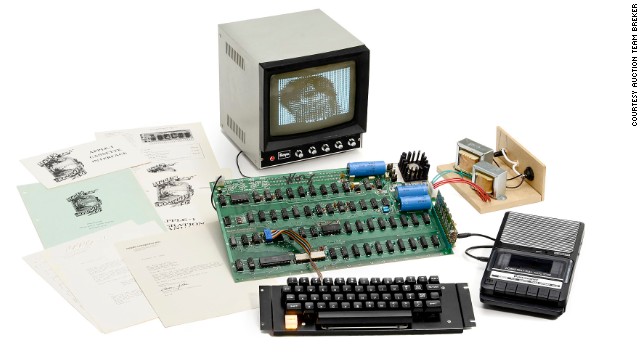
    Jobs moved to the house with his foster parents as a seventh-grader and lived there through high school. In the attached garage, he and Steve Wozniak assembled the first 50 Apple 1 computers in 1976. The pair sold them to Paul Terrell's Byte Shop in Mountain View for $500 each.
    Nine months later, in 1977, Apple Computer Co. was formally established and moved its operations to nearby Cupertino.
    One of the original computers later sold at an auction for $231,000. Jobs went on to become a visionary who built Apple into the world's most valuable company and changed the face of computing.
    "Steve Jobs is considered a genius who blended technology and creativity to invent and market a product which dramatically changed six industries -- personal computers, animated movies, music, phones, tablet computing and digital publishing," according to the property evaluation.
    The three-bedroom, two-bath house was built in 1952 and is valued at $1.6 million, according to real-estate website Zillow. It's currently owned by Jobs' adoptive sister, Patricia Jobs.

    Facebook admits young teens are losing interest in the site

    facebook earnings Investors love Facebook's mobile growth over the past year.
    NEW YORK (CNNMoney)

    Facebook shares soared 15% Wednesday on blowout quarterly results -- but the stock lost steam after the company admitted young teens are losing interest in the site.

    "We did see a decrease in [teenage] daily users [during the quarter], especially younger teens," Facebook chief financial officer David Ebersman said Wednesday, during the company's third-quarter earnings conference call with analysts. He said Facebook usage among overall U.S. teens was "stable," however.
    Previously, Facebook had defended itself against multiple recent studies and articles proposing that teens don't find Facebook cool anymore. Last quarter, CEO Mark Zuckerberg said it "just isn't true" that the company has a problem with the teen market.
    Ebersman's admission -- coupled with other bits from Wednesday's call, including the fact that Facebook isn't planning to ramp up the number of ads in users' feeds -- sent Facebook shares slightly lower in after-hours trading.
    That was a big disappointment given that Facebook (FB, Fortune 500) shares had been up as much as 15% earlier in the evening, after blowing away Wall Street's sales and profit expectations for the third quarter.
    Facebook's sales jumped 60% over the year to more than $2 billion. Excluding one-time charges, Facebook earned $621 million -- double the company's profit during the same quarter last year.
    Strong mobile results: Perhaps even more pleasing to investors was that Facebook's mobile business in particular came in very strong. Mobile ads now account for 49% of all Facebook ad revenue, up from 41% last quarter and easily beating analysts' expectations.
    That's impressively rapid growth, considering that Facebook began serving mobile ads just last summer.
    Related story: Facebook kills search privacy setting
    Before Facebook launched those ads, the company's lack of mobile monetization had been a particular sticking point for investors. Shortly after the company filed for an initial public offering last May, Facebook disclosed that it wasn't making "any meaningful revenue" from its growing pool of mobile users. That kept the stock in the doldrums until the company finally launched mobile ads in August 2012.

    Wednesday, 30 October 2013

    The weirdest things recently found on Mars

    What's up with the strange colors of these dunes? Mars isn't really blue and gold, it's just that this picture was taken in infrared wavelengths to better show the composition of the sand here. But these dunes, known as "<a href='http://hirise.lpl.arizona.edu/ESP_033272_1400' target='_blank'>barchans</a>," would look striking in any light: they often form cool horns or notches on their steep leeward sides. What's up with the strange colors of these dunes? Mars isn't really blue and gold, it's just that this picture was taken in infrared wavelengths to better show the composition of the sand here. But these dunes, known as "barchans," would look striking in any light: they often form cool horns or notches on their steep leeward sides.

    HIDE CAPTION
    The weirdest things recently found on Mars
    <<
    <
    1
    2
    3
    4
    5
    6
    7
    8
    9
    >
    >>
    STORY HIGHLIGHTS
    • Mars reconnaissance Orbiter continues to send new images to earth
    • Pictures highlight unusual topography
    • Images use 'false color' to highlight important features
    (Wired) -- Mars is a crazy place. In recent years we've discovered some of the strangest things on the Red Planet: ice spiders, Swiss cheese terrain, and perfectly spiral-shaped lava tubes.
    And the more we explore our near planetary neighbor, the weirder the things we find get. NASA's Mars Reconnaissance Orbiter, which has been circling Mars since 2006, provides the clearest and highest-resolution images of the planet's surface. Looking through the image archive of its HiRISE camera, which can resolve things about a meter wide on the ground, reveals a vast supply of strange and wonderful things.
    Here we share some of the orbiter's most recent weird sightings from the last few months. The images provide incredible scientific insights into Mars. But, perhaps just as important, they are beautiful, fascinating, and reflective of the alien world that sits not too far from our own.
    Just a note on the colors in these images: HiRISE has cameras that see in slightly different wavelengths than our own eyes. Many of the photos it produces are in "false color," meaning the different wavelengths have been assigned colors for purposes of clarity or to highlight an important feature. There are no actual turquoise dunes on Mars. But the false color pictures do allow scientists to differentiate various textures and materials on Mars.

    Security hole found in Obamacare website


    obamacare code Until last week, clumsy computer coding on Healthcare.gov meant that someone could easily gain partial access your account on the Obamacare website.
    NEW YORK (CNNMoney)

    The Obamacare website has more than annoying bugs. A cybersecurity expert found a way to hack into users' accounts.

    Until the Department of Health fixed the security hole last week, anyone could easily reset your Healthcare.gov password without your knowledge and potentially hijack your account.
    The glitch was discovered last week by Ben Simo, a software tester in Arizona. Simo found that gaining access to people's accounts was frighteningly simple. You could have:

    • guessed an existing user name, and the website would have confirmed it exists.
    • claimed you forgot your password, and the site would have reset it.
    • viewed the site's unencrypted source code in any browser to find the password reset code.
    • plugged in the user name and reset code, and the website would have displayed a person's three security questions (your oldest niece's first name, name of favorite pet, date of wedding anniversary, etc.).
    • answered the security questions wrong, and the website would have spit out the account owner's email address -- again, unencrypted.
    Armed with the account holder's email address, a person with malicious intent could easily track down their target on social media, where they'd likely discover the answers to those security questions.
    It wouldn't have even taken a skilled hacker. Anyone with bad intentions -- and a minimal understanding of how to read a website's code -- could have figured it out. While such an attack might not have yielded your Social Security number or health information, it would have exposed your address and phone number.
    Related story: Obamacare 'hub' back online after malfunction
    By Friday, that dent in security was gone. But security consultants say it's disconcerting that such a privacy concern remained unaddressed for more than three weeks after the federal government launched the Obamacare website Oct. 1.

    Still, Simo fears that a savvy hacker could find other holes and Obamacare applicants' data will be
    compromised on a mass scale.
    "This seems really sloppy," Simo said. "Either the developers were incompetent and did not know how to do the basic things to protect user information, or the development was so fractured that the individuals building the system didn't understand how they fit into the bigger picture."
    Related story: Obamacare website: 6 biggest contractors
    The flaw wasn't mentioned at last week's congressional hearing, when government contractors CGI Federal and Quality Software Services Inc. testified about their responsibilities in the project. But another point was made by Congressman Mike Rogers, R-Mich.: companies keep patching up the website's holes, and adding thousands of new lines of computer code, exposing the entire system to unforeseen security problems.
    Cyberattacks on Obamacare exchange websites are already underway. At least one state, Connecticut, has seen outsiders attempt to gain "irregular" access, according to Jim Wadleigh, chief information officer of Access Health CT.
    Congress' inquiries continued Tuesday, when the Ways and Means Committee posed questions about the site's glitches and security to Marilyn Tavenner, head of the health department's Centers for Medicare & Medicaid Services.
    The security hole is just the latest in a series of mishaps for the Obamacare website's launch. In the first weeks, system errors prevented people from signing up to the newly launched insurance exchanges. Over the past weekend, a government contractor's network failure again left users unable to apply.
    Monday brought the latest worrisome disclosure: that the entire Obamacare website operates on a single computer server in Virginia -- without any backup, according to Congressman Rogers. To top of page

    'Feel' objects in thin air: The future of touch technology

    Ivan Poupyrev, the Principle Research Scientist at Disney's Interaction Group, told CNN that in his view the future will see "touch screens on mobile devices, tablets, laptops, tables and walls. Everything will be touch-sensitive in the future and we need tactile feedback to make it more useful and usable."
    As well as making screens you can feel, Disney Research is also developing tactile equipment that doesn't require any actual contact at all -- like an Xbox Kinect, but where you feel as though you can touch objects in front of you in thin air. The device is called the "Aireal" and in its developers' words it provides "interactive
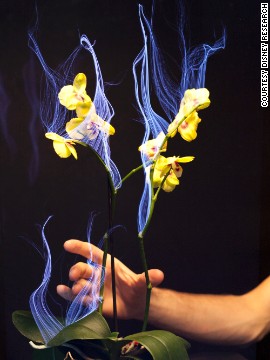
    What will the future of touch look like? With haptic technology, which could be described as the science of touch, users have a physical experience, making the technology more interactive. This will revolutionize the gaming experience but also be useful in medicine and every-day life. How about plants that can interpret how you touch them?
    What will the future of touch look like? With haptic technology, which could be described as the science of touch, users have a physical experience, making the technology more interactive. This will revolutionize the gaming experience but also be useful in medicine and every-day life. How about plants that can interpret how you touch them?
    HIDE CAPTION
    Feel it in the air! This is the future of touch
    <<
    <
    1
    2
    3
    4
    5
    6
    7
    8
    9
    10
    11
    12
    >
    >>
    STORY HIGHLIGHTS
    • Researchers are working on allowing you to 'feel' objects in mid-air
    • Disney Research uses bursts of air, Bristol students experimenting with ultrasound
    • New touchscreens also offer tactile feedback
    • Inventions point to a future where you can feel technology in new ways
    (CNN) -- Touch technology has come a long way in the last decade. Just six years ago, most phones used traditional keypads; today, almost all smartphones have a touchscreen, and the technology has spread to tablets, handheld consoles and laptops as well.
    One thing still lacking in touchscreens, though, is any kind of sensory feedback; you cannot feel the keypad on your iPhone, nor the action buttons when you play a game on your Android tablet. You can't feel the icons on your home screen, or the texture of your photos.
    Over the next decade all this looks set to change with the emergence of new tactile or "haptic" devices. One new technology announced this month by the research wing of the Walt Disney Company allows users to feel textures on a touchscreen, pointing to a future where you will be able to use your phone not only to see and hear, but also to feel.
    tactile experiences in free air." The Aireal works by blowing small rings of air at a user to simulate touch, 
    movement or collisions with objects.
    Students at the University of Bristol in England are working on a similar project called UltraHaptics, which gives the same sense of mid-air feeling through ultrasound vibrations rather than pulses of air.
    According to its inventors, UltraHaptics deploys "ultrasonic transducers" to produce a variety of different sensations on the skin -- basically using sound waves to simulate touch.
    Everything will be touch-sensitive in the future
    Ivan Poupyrev, Principle Research Scientist at Disney Interaction
    Poupyrev says UltraHaptics is an interesting idea that, in his view, points to the future of touch devices: "I love this work -- (it is) very well done. In general creating tactile feedback in free air is a very important research direction."
    Other products under development use tactile feedback in completely different ways. A new sound device called the Woojer aims to immerse users in sound by using low frequency vibrations to create the physical sensation of bass -- rather like being in a loud cinema or standing in front of a speaker at a rock concert.
    The Tactus takes a different approach to bringing feeling to a touchscreen by creating real, physical buttons that emerge from the screen to emulate a physical keyboard.
    Another new invention, the Tacit, aims to provide physical feedback to help visually impaired people navigate by "feeling" the objects around them. The device attaches to the wrist and uses ultrasound to scan the immediate area, delivering soft pressure to the user's wrist as they get close to objects.
    If these inventions go into production, then Poupyrev's projected future of tactile devices begins to look so close ... you could almost touch it.

    New Google Glass is on the way

    New Google Glass will work better with eyeglasses and include an ear bud for better audio, Google says.
    New Google Glass will work better with eyeglasses and include an ear bud for better audio, Google says.
    STORY HIGHLIGHTS
    • New Google Glass is on the way
    • Second generation of Glass will work with eyeglasses, have ear bud
    • About 10,000 testers will be able to invite three friends
    • Google Glass currently costs $1,500, even for testers
    (CNN) -- A new version of Google Glass, the company's breakthrough entry into the world of wearable tech, is on the way.
    Current testers, or "Explorers," in Google's parlance, will get a chance to swap out their current models for the new ones, the company said in a Google+ post.
    The new Google Glass hardware will work with eyeglasses or shades, and include an ear bud to replace the speaker in the current model. The bone-conduction speaker, which, similar to some hearing aids, literally sends sound waves through the skull to the ear, has been called faulty by some testers.
    The swap begins Friday and testers will have 60 days to decide if they want new Glass.
    The roughly 10,000 current testers also be able to invite up to three friends into the program, which requires testers to fork over the current $1,500 price of the glasses.
    "Over the next few weeks, all Explorers will have the opportunity to invite three friends to join the program," the post said. "They'll be able to buy Glass online and can have it shipped to their home, office, treehouse or igloo. We're counting on you to get Glass to the people you think will make great Explorers."
    Google has not said when Glass will go on sale to the general public, though it is expected to be some time next year.
    Google Glass, worn like regular glasses, has a high-resolution display and lets wearers use voice commands to shoot photos or videos and access features like e-mail, text messaging, Google Maps, Google search and a handful of other apps.
    It's not clear what hardware changes will be made to make the new Glass work better with other eyeglasses, though some in the tech press were speculating that users will be able to insert prescription lenses into it. It's possible to wear both Glass and eyeglasses currently, though many users who have tried have called it awkward.
    The post didn't say how the overall design of Glass will be tweaked in the next version. Looking a little bit like something out of an '80s sci-fi movie, some have said the device looks ... well ... goofy, at least on the sometimes geekish early adopters who have been sporting them.
    Glass has been a groundbreaker in wearable tech, a movement that's shaping up to be the coming wave in the technology world.
    Samsung has weighed in with Galaxy Gear, a smartwatch that works with its Android smartphones.
    Google and Apple are believed to be joining the smartwatch market soon, and Pebble and Sony are just a couple of the other names that have wristwatch tech for sale.

    Monday, 28 October 2013

    This Smartpen Connects to Your iOS 7 Device via Bluetooth

    Lvscroi07bb
    Although it’s true that the simple function of writing things down on paper is rapidly falling out of fashion thanks to our digital devices, there are still some out there with a preference for jotting down notes with a pen or pencil. For those users, the new Livescribe 3 Smartpen could be perfect bridge between old school writing and smartphone technology.
    The new device, a worthy follow-up to the company’s Sky Wi-Fi smartpen released last year, can record everything the user writes and hears. Once that information is captured, it has the ability to then transfer that data to your iOS device via Bluetooth.

    Compatible with iOS 7, the device's app immediately displays the transferred data as soon it's opened on an iPad or iPhone.
    By introducing a Bluetooth version of its smartpen, Livescribe has made the prospect of using one of these still somewhat bleeding-edge devices significantly more attractive. Most mobile users are already trained to pair their wireless keyboards and headsets via Bluetooth, so working the Livescribe 3 into one’s existing mobile toolkit should be absolutely painless.
    Equipped with a micro-USB charging cable, the Livescribe 3 is available for $149.95. The company is also releasing a Pro Edition that includes a leather smartpen portfolio with a 100-sheet hardbound journal, as well as a one-year subscription to Evernote Premium.

    Apple's Spaceship Campus Will Have a Flying Saucer Auditorium


    Amid all the excitement around Apple’s recent iPad event, some of us may have missed a new set of images for the company’s new campus that emerged in the last couple of weeks. The drawings depict an event auditorium that mirrors the flying saucer aesthetic of the main building, but in a much more interesting way.
    Found in a set of images posted to the Cupertino City Hall website, discovered by the Apple Gazette, the circular, glass enclosed structure is actually an entrance to an underground auditorium.
    Additional images shared on the website of one of the architects working for the firm contracted to build Apple's new headquarters also show off aerial and side views of the structure.
    Mirroring the architectural approach of Apple’s Fifth Avenue glass cube building, the outside is completely made of glass, topped off by a white disc, which from a distance makes the roof appear as if it's hovering in mid-air.
    Included in the building’s design are two circular elevators leading to the underground facility, another architectural touch borrowed from the Fifth Avenue store.
    The 1,000 seat auditorium, along with the distinctive main building, are expected to be completed sometime in 2016.

    Captcha FAIL: Researchers Crack the Web's Most Popular Turing Test


    Captcha
    Captcha is the the gold standard for Turing tests on the web: Whenever an online form wants to check if you're a human being and not a spambot, it asks you to decipher one or two distorted words, presented as images. But what if there was a way for machines to defeat it?
    That's exactly what researchers at Vicarious AI say they've done. In trying to develop a machine that thinks like a human — a multi-decade project — the small team of computer scientists says they have their first breakthrough: A computer that can process visual information similar to a human. That brings with it the ability to solve Captcha from the major web services of Google, Yahoo and PayPal up to 90% of the time.
    "Past solutions may have solved a Captcha at a particular point in time, whereas this solution solves Captcha," says D. Scott Phoenix, one of the co-founders of Vicarious. "Past solutions were hacks that were not part of a general vision system, whereas we're trying to build an intelligent machine, and it happens to solve Captcha along the way."
    Captcha (short for Completely Automated Public Turing test to tell Computers and Humans Apart) has been around since the mid 1990s, and since then many others have claimed over the years to have developed ways to get around it. Luis von Ahn, one of the inventors of Captcha, told Mashable that most techniques usually involve targeting a specific weakness of a specific Captcha system, and don't go far.
    "The more common [approach] is to exploit specific weaknesses in the Captcha," says von Ahn. "That's dealt with very easily. I'd say 75% of the approaches do that sort of thing."
    However, Vicarious' technique falls into another group, one that takes on Captcha with a broader approach: examining what makes Captcha so hard for computers, and changing the way they interpret visual data to make it easy, or at least easier.
    Although Vicarious isn't the first research team to defeat Captcha in this way, its success rate compared to past attempts is much higher.
    Although Vicarious isn't the first research team to defeat Captcha in this way, its success rate compared to past attempts is much higher. "We [train] the system by showing it images of letters," says Dileep George, Vicarious' other co-founder. "It needs just a few examples of letters to learn about them. Previous work would require in the order 10,000 examples of a letter even to understand minor variations."
    Some websites offer Captcha defeaters, although these are usually based on a computational trick that's easy for Captcha operators to adapt to, collections of known Captcha images, or even human drones. Since Captcha is present on many web services (such as logging in Gmail accounts), anything that defeats it could be a potential gold mine to spammers.
    Vicarious isn't trying to help them out. Its goal is to get machines to think like humans, not make their lives harder, and has no intention of making its Recursive Cortical Network (RCN) technology available to the public. In time, however, it hopes to apply the tech to fields such as medicine (think analyzing x-rays), robotics and search engines. At the very least, it's probably created the most sophisticated optical character recognition (OCR) software ever made.
    It seems inevitable, though, that Captcha will eventually fall in the wake of ever-advancing computer technology, but von Ahn isn't worried. Even if computers get really good at defeating Captcha, there are many other factors web services can use to weed out machines.
    "At the end of the day, these programs are not perfect — they still make a number of mistakes," he points out. "Every time they make a mistake, they stick out a little. If an IP address is making more mistakes than a normal human, it'll get blocked. Also, a human takes 11 or so seconds to solve a Captcha, so if it's too far off, that's weird. Normal people only try three times. The Captcha itself is usually just one signal in a lot of signals."
    In other words, Captcha will evolve, not go away. While computers will eventually solve text-based Captchas, image- and animation-based Captchas (like these) are waiting to replace them. After all, if it's hard for computers to tell what a distorted word is, imagine how flummoxing "what's in this picture?" would be.
    Only when computers truly think like humans will the Turing test become obsolete. And when that happens, there will be many more troubling questions to address before figuring out how to keep our Facebook accounts secure.

    Hyundai and Kia Adding Android-Based Navigation to Cars by End of 2013

    hyundai-genesisI’ve been driving my current car for the last 7 years now. It’s pretty beat up, warning lights keep coming on and $500+ repairs are a regular occurrence. I could afford to buy a new car now, but I’m waiting – waiting for the technology in new cars to finally catch up with the tech I use when I’m not behind the wheel.
    As it turns out, I won’t have to wait much longer. This week, Korea’s ET News reported that car makers Hyundai and Kia will be offering an Android-based navigation interface with their new Genesis and Soul models by the end of the year.
    It’s not known specifically what build of Android will be used, or how customizable it will be (probably not very, due to road safety concerns). At the very least, you can expect connectivity with existing Android smartphones like the Samsung Galaxy S4, letting you answer calls and stream music using your car stereo. One would expect that Google Maps integration will be a given, too.
    Android isn’t the only mobile operating systems making its debut in vehicles in the coming months. Earlier this year, Apple announced that it would be working with car manufacturers to create “iOS in the Car,” a new standard that would mirror your iPhone’s screen directly in your car’s dash. Chevrolet, Ferrari, Honda, Jaguar, Kia, Mercedes, Nissan, Volvo and others will be including the new feature as an option in select 2014 models.

    MacBook Air is the best Apple laptop

    macbookair review
    NEW YORK (CNNMoney)

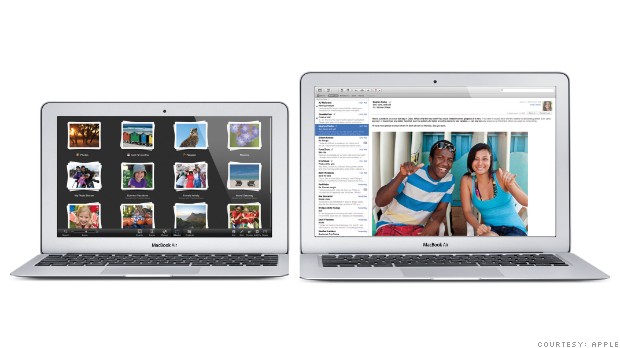
    The MacBook Air is attractive, durable, thin and light - all qualities you want in a laptop.

    It says a lot that the 2010 revamp of Apple's ultra-thin laptop was the lynchpin that single-handedly forced Intel (INTC, Fortune 500) to create the specifications for rival PC ultrabooks in 2011. Three years later, it's still the gold standard for laptop hardware -- and CNNMoney's Best in Tech for the Apple laptop category.
    The MacBook Air's aluminum chassis is near perfect -- so much so that Apple (AAPL, Fortune 500) has gone nearly four years without making a major change to it.
    On paper, the MacBook Air's low-power, dual-core Intel Core processor may seem modest, but it has been well-optimized to handle nearly anything you could throw at it. Web browsing, HD video and light photo and video editing are tasks well within the scope of the MacBook Air.
    It also easily provides users with an entire workday's worth of power before having to recharge. Coders, gamers, and creative professionals will likely need more from their machines, but for the rest of us, the MacBook Air is plenty of machine. Apple's higher end MacBook Pro laptops are objectively more powerful. But for most people, the added benefits of the MacBook Pro simply don't justify the considerable extra cost over the MacBook Air, which starts at $999.
    Apple's multitouch trackpads are the best you'll find on any laptop, and the MacBook Air is no different. Spacious and responsive, you never have to think about getting the cursor where it needs to be on the screen, or having to click a specific part of the trackpad. The keyboard is also quite excellent, though a few companies, such as Lenovo, may be slightly better in that category.
    The one current knock against the MacBook Air might be the display. It has always been good, but as PC competitors move to 1080p HD displays, the MacBook Air screen is starting to show signs of age. Still though, it is above average any way you look at it.
    As for audio, laptop speakers are laptop speakers. They'll never replace a proper desktop system, or a good pair of headphones, or even a decent Bluetooth speaker. But for all basic personal uses, the MacBook Air speakers are fine.
    There's a case to be made for the $999 11-inch MacBook Air (namely portability and value), but shelling out $100 more for the 13-inch model will give you a reasonablly sized screen and an SD card reader -- a wonderful convenience if you regularly use a stand-alone camera.
    And when you compare the $1,099 MacBook Air to its competitors, you actually aren't subject to much of the alleged "Apple tax." Of course, there are cheaper 13-inch ultrabooks to be found, but they're lesser devices in many ways. When stacked up against other ultrabooks that promise the same combination of functional design and performance - as Acer, Asus, and Lenovo do - the MacBook Air is either on par or cheaper.
    Apple laptops aren't for everyone. But for those who do prefer them -- or don't care one way or the other -- the 13-inch MacBook air is the best Apple laptop available. To top of page

    Twitter is worth more than $11 billion

    Twitter IPO's #winners
    NEW YORK (CNNMoney)

    Twitter isn't yet making a profit, but analysts think its future is bright -- and that it's worth more than the current $11 billion valuation.

    Twitter set the preliminary price range for its initial public offering at $17 to $20 per share late Thursday. At the top of that range, the company would be worth $11 billion.
    That's lower than the $15 billion to $20 billion valuation that some experts had predicted.
    Even the $11 billion figure might sound high given that Twitter is unprofitable. But investing in a company is about belief in its future potential, not its current situation.
    In a note to clients on Friday, SunTrust analyst Robert Peck said Twitter "wisely started the pricing conservatively" -- and he expects the company to raise its range, which isn't binding, over the next few weeks.
    "[Twitter] left room to raise the range based on potential investor demand, which we anticipate will be strong," Peck said. He based that demand prediction on discussions with several investors over the past few weeks, which leads him to believe the deal will be "well received."
    In fact, Peck set a $50 price target on Twitter.
    Morningstar analyst Rick Summer hasn't yet set his price target, but he noted that Twitter's valuation is "rich" when comparing its financial performance with that of Facebook (FB, Fortune 500) and LinkedIn (LNKD). Still, he's extremely positive about the company's offerings and business model.
    "Twitter is a very unique medium, and we think that speaks extremely well of the company," Summer said. "It's not just about selling ads on the side of a page and measuring impressions."
    Twitter runs ads for corporate accounts, specific tweets and topics, and the sponsored content is tucked right into users' feeds. Advertising accounted 85% of Twitter's revenue in 2012.
    "They've done a good job of offering unique advertising and not forcing products that don't work," Summer said. "They dominate their market and really partner with companies, which use Twitter to distribute their content widely. It's attractive."
    Twitter has also been quick to offer those ad products on mobile. Three-quarters of Twitter's monthly active users accessed the service on a mobile device last quarter, and mobile ads brought in 70% of its total ad revenue.
    Mobile was the big area where Facebook suffered -- and, as a result, so did its stock. So it's a big plus that Twitter has figured out this important part of its business.
    But Nate Elliott, lead social analyst at Forrester, cautioned against judging Twitter through the lens of Facebook.
    Twitter was founded more than seven years ago, while Facebook had eight years under its belt when it went public in 2012. That's not too much of a difference from a timeline perspective, but Elliott pointed out that the two social networks have very different histories.
    "The big comparison everyone is making is how Twitter stacks up to Facebook," said Nate Elliott, lead social analyst at Forrester. "But Twitter is at a much earlier stage of business than Facebook was when it went public. Twitter is still figuring out how to best serve its audience."
    Twitter may be more green than Facebook, and is certainly less popular -- it has about a fifth of Facebook's user base. But that newness could be to Twitter's advantage.
    "We've had advertising partners tell us they're kind of burned out on Facebook, but they haven't gotten to that point on Twitter yet," Elliott said. "That doesn't mean they're necessarily sold on Twitter. But they're listening." To top of page

    Trading in your iPad? Do it now

    ipad trade in A new iPad is probably coming soon, and companies that buy used electronic devices say they're experiencing a surge of customers trading in their old tablets.
    NEW YORK (CNNMoney)

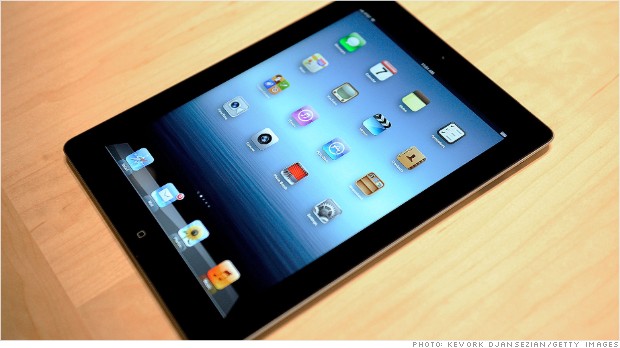
    With a new iPad likely around the corner, iPad trade-ins are on the rise -- and selling prices are falling fast.

    Companies like Gazelle and NextWorth, which buy used electronic devices, say they're experiencing a surge of customers trading in their old iPads. The spike began Tuesday, when Apple (AAPL, Fortune 500) announced it has an upcoming event Oct. 22. Apple is widely expected to be giving its tablet its first big redesign in more than a year and a half.
    At Gazelle, iPad trade-ins have soared to their highest level this year. IPads now make up 20% of items traded in on Gazelle's website, up from 11% a week ago.
    "Previous generations all look the same," said Anthony Scarsella, Gazelle's chief gadget officer. The new iPad could have more processing power, a better camera and even use Apple's latest Touch ID fingerprint sensor.

    Apparently This Matters: The zombie car that nobody loved

    Police and bystanders look at a the Editor's note: Each week in "Apparently This Matters," CNN's Jarrett Bellini applies his warped sensibilities to trending topics in social media and random items of interest on the Web.
    (CNN) -- Here's the short, tragic story of a little car in China that nobody wanted.
    Some time back in 2012, a blue van was innocently parked along Peace Road in the village of Huayang in Sichuan Province. And it just sat there. Abandoned. The owner nowhere to be found.
    We still don't know what happened to him. Or her. But we'll just have to assume this person died or is in the middle of a really good "Law & Order" marathon.
    Don't laugh. It's how I lost most of my 20s. Just me and Detective Briscoe. And a bowl of gravy.
    Eventually, over the course of a year, Mother Nature did her thing and the van became consumed by vines. Amazingly, the foliage almost completely engulfed every part of the vehicle.
    \
    "Apparently This Matters" Is Jarrett Bellini's weekly (and somewhat random) look at social-media trends.
    And when people on the Internet started sharing pictures of this crazy car-bush, it sort of became a celebrity.
    Not in the George Clooney kind of way. But in the drunk-and-naked-at-a-Bar-Mitzvah YouTube kind of way.
    "Hey, who wants to see my shofar?"
    "Go home, Rabbi."
    So, people online started paying attention to this ever-growing mound of foliage with a funny name -- in China, vehicles that are unloved and abandoned are referred to as "jiangshiche" or "zombie cars."
    Eventually, police managed to contact the original owner of the "zombie car," Wang Ping, who explained that he had sold his blue van over three years ago but couldn't recall the buyer's name. So, authorities finally decided to just get rid of the damn thing.
    However, when they came to take it away, police were unable to dig the van out from beneath all the vines. It had simply become too thick and thorny. So, they just towed it off, foliage and all, hauling what appeared to be a giant bush slowly and hilariously down the highway.
    Photos were taken, and, thus, this week, China's famous "zombie car" emerged once again to bask in the warm glow of the Internet's spotlight.
    So, that's the short, tragic (and completely pointless) story of a car that nobody wanted, and the Internet who loved it.
    To be honest, seeing this thing all alone kind of made me sad. I care about my car like a big, stupid child. And I only recently realized this.
    You see, the other day I was at the auto shop waiting on a minor repair -- as one does when you have no technical skills beyond heating things in the microwave.
    So, to pass time at the shop, I started thumbing through some of those hot rod magazines filled with pictures of shiny cars draped by scantily clad women. They had several different ones on the shelf -- Lugs and Jugs, Groin and Driver, The Economist -- I don't remember the exact titles, but you get the point.
    And as I turned my attention away from those glossy pages of beautiful, perfect steel and skin, and peered through the shop's window into the garage, my gray Saturn suddenly seemed incredibly ... unsexy.
    You know, because it's a Saturn. Really, there's nothing "suddenly" about it.
    However, almost immediately, this fact didn't matter because, hey, it was mine. Sure, it's big, and stupid, and gray. But it gets me to Kroger.
    And Kroger has Lean Pockets and Klondike Bars.
    And, for that, I think it's worthy of a sexy photo shoot.
    "There ya go, Tina, get nice and close to those side-impact air bags. Work that cup holder. Wooooooo!"
    Anyway, my Saturn is awesome, and you should check it out in next month's issue of Groin and Driver.

    Facebook Acquires Onavo to Strengthen Global Mobile Strategy

    Zuck-outline
    Facebook on Monday confirmed the acquisition of Onavo, a Palo Alto-based startup that makes data-compression software to help minimize data usage on smartphones. The terms of the deal were not disclosed, and Onavo will remain a "standalone brand" within Facebook, according to Onavo's blog post.
    Three-year-old Onavo will also retain its Tel Aviv office, giving Facebook a new office on the ground in Israel.
    The acquisition provides Facebook with the kind of technology that will help the company build the mobile app for its next one billion users.
    As Facebook continues to expand into emerging markets abroad, creating an app that is affordable as well as functional is a major undertaking for the world's largest social network. Data plans represent a barrier to entry for many potential users who either can't afford them or don't have the necessary Wi-Fi strength to operate the app.
    Facebook has been working to solve this problem by testing and building its mobile apps with data usage in mind. Facebook regularly experiments with old versions of Android at its Menlo Park headquarters to simulate the environment in which its future users will encounter the app. To further understand the marketplace, Facebook sent a handful of engineers into a market in the Philippines earlier this year to purchase the best phone they could find for less than $50.
    In addition to building a better Facebook app, the purchase of Onavo also plays into the company's mission to bring Internet access to all corners of the globe through Internet.org.
    "We’re excited to join their team, and hope to play a critical role in reaching one of Internet.org’s most significant goals — using data more efficiently, so that more people around the world can connect and share," wrote Onavo's co-founders, Guy Rosen and Roi Tiger, on the company blog.
    Facebook echoed Onavo's announcement.
    "Onavo will be an exciting addition to Facebook," the company shared in a statement. "We expect Onavo’s data compression technology to play a central role in our mission to connect more people to the Internet, and their analytic tools will help us provide better, more efficient mobile products.”

    Is YouTube Launching a Music Service?

    Youtube-music-awards-nominees
    Is YouTube about to take on Spotify with a subscription music service of its own? That's what a report from Billboard magazine claimed Wednesday, citing "several sources familiar with the plans."
    Like Spotify, the report said, the music service will have a free tier (with ads) and a premium tier (without ads). This would push the Google-owned video service in a new audio direction, with music available for streaming or caching on all platforms; however, YouTube would still hold on to its roots by offering music videos as part of the service.
    YouTube sent out this canned response to multiple news services, whether they'd asked about the report or not: "We’re always working on new and better ways for people to enjoy YouTube content across all screens, and on giving partners more opportunities to reach their fans. However, we have nothing to announce at this time."
    Fortune reported a similar story in March, and said that the service would be launching "later this year."

    LG Unveils LG Flex, the First 'Real' Curved Smartphone

    Lg-g-flex
    LG has launched its first curved smartphone, the LG Flex.
    The device has a curved 6-inch, 720p OLED display, a Snapdragon 800 processor, 2GB of RAM and a 13-megapixel camera.
    Unlike Samsung's Galaxy Round, which has a horizontally curved screen, the LG Flex is vertically — top to bottom — curved.
    flex
    It'll be interesting to see which approach — Samsung's or LG's — fares better on the market.
    LG claims the curved form of the phone is optimized "for the average face," delivering better voice and sound quality. It may also offer a better grip, and a better viewing experience when used for watching video in landscape mode.
    The Flex has another trick up its sleeve: The back is covered with a special "elastic coating" that, according to LG, allows the phone case to "self-heal" minor scratches and nicks. We can't wait to test that claim.
    Starting next month, the LG G Flex goes on sale in Korea. There's no price or release date for the rest of the world.