Follow us

Pages

Thursday, 19 December 2013

Jonathan unveils Nigeria’s first indigenous unmanned aerial vehicle

Kaduna – President Goodluck Jonathan on Tuesday in Kaduna unveiled the country’s first indigenous unmanned aerial vehicle, GULMA, designed and constructed by the Nigerian Air Force.
Speaking at the ceremony, Jonathan said that the unveiling of the vehicle marked another landmark moment in the nation’s history.
He said that besides its diverse military application, the vessel would provide a range of benefits in disaster management, power line surveys and law enforcement.
Jonathan said that the vehicle would also be useful in aerial imaging/mapping, telecommunications and weather monitoring.
“It is also rapidly becoming an important tool in news coverage, environmental monitoring, and oil and gas exploration.
“Considering the potential impact of its benefit and versatility, I cannot but say how proud I am of the men and women of our Armed Forces.
“Apart from their commitment to the protection of our sovereignty, they are helping to keep our nation ahead in military science and technology and to keep their civilian counterparts on their toes.
“Today, as we stand in appreciation of the gallant men and women of our Air Force, we are reminded that hard work and diligence can break many barriers,’’ he said.
Jonathan commended the Chief of Air Staff and all officers and men of the Nigerian Air Force for the achievement, noting that it would strengthen the country.
He said it would also enhance the nation’s role in peace keeping and conflict prevention.
The president said he was optimistic that this stride by the Nigerian Air Force would mark a turning point for indigenous technology in every sector of the nation’s life.
“Let me assure the Air Force of the Federal Government’s support for this and all other research projects.
“We will encourage and assist private sector concerns to key into mass production of the project to achieve the highest and best commercial use of this prototype Unmanned Aerial Vehicle.
UNVEILING OF 'GULMA' NIGERIA'S FIRST INDIGENOUS UNMANNED AERIAL VEHICLE IN KADUNA
UNVEILING OF ‘GULMA’ NIGERIA’S FIRST INDIGENOUS UNMANNED AERIAL VEHICLE IN KADUNA
“As I said in my Independence Day address, our nation is made great by the big and small efforts of regular citizens.
“Indeed, indigenous initiatives remain indispensable in achieving national greatness.
“To retain the country’s importance on the global stage, we must continue to produce leaders in science, technology, and engineering, and invest more in ideas,’’ the president said.
In his remark, Supervising Minister of Defence Labaran Maku said the development of a surveillance aircraft by the Nigerian Air Force was a bold statement of government’s resolve to provide security for the Nigerian populace.
Maku, who is the Minister of Information, said that the GULMA UAV would potentially afford the armed forces a window of immense opportunities in its task of acquiring timely intelligence and combating criminality.
“Although the UAV was a brainchild of the Nigerian Air Force, it is important that other services and security agencies incorporate it into their operations, if its potential is to be fully harnessed.
“There is therefore, the need for a comprehensive policy on UAV acquisition and operation to optimise the employment of GULMA UAV by all services and security agencies,’’ he said.
Earlier, the Chief of Air Staff, Air Marshal Alex Badeh, had said that the GULMA was designed to meet vast expectations and needs.
Badeh said that the GULMA could be employed by the armed forces and security agencies for the protection of the country.
He explained that the air force envisaged partnership with agencies such as NEMA and the Nigeria Air Space Management Agency for weather forecasting.
“Furthermore, the GULMA, as a qualitative, timely and reliable source of information could serve as a powerful tool for media practitioners.
“To sustain the current tempo of development, the NAF would require the assistance of government in infrastructure and human capacity development. (NAN)
- See more at: http://www.vanguardngr.com/2013/12/jonathan-unveils-nigerias-first-indigenous-unmanned-aerial-vehicle/#sthash.Kz7FgRsg.dpuf
Kaduna – President Goodluck Jonathan on Tuesday in Kaduna unveiled the country’s first indigenous unmanned aerial vehicle, GULMA, designed and constructed by the Nigerian Air Force.
Speaking at the ceremony, Jonathan said that the unveiling of the vehicle marked another landmark moment in the nation’s history.
He said that besides its diverse military application, the vessel would provide a range of benefits in disaster management, power line surveys and law enforcement.
Jonathan said that the vehicle would also be useful in aerial imaging/mapping, telecommunications and weather monitoring.
“It is also rapidly becoming an important tool in news coverage, environmental monitoring, and oil and gas exploration.
“Considering the potential impact of its benefit and versatility, I cannot but say how proud I am of the men and women of our Armed Forces.
“Apart from their commitment to the protection of our sovereignty, they are helping to keep our nation ahead in military science and technology and to keep their civilian counterparts on their toes.
“Today, as we stand in appreciation of the gallant men and women of our Air Force, we are reminded that hard work and diligence can break many barriers,’’ he said.
Jonathan commended the Chief of Air Staff and all officers and men of the Nigerian Air Force for the achievement, noting that it would strengthen the country.
He said it would also enhance the nation’s role in peace keeping and conflict prevention.
The president said he was optimistic that this stride by the Nigerian Air Force would mark a turning point for indigenous technology in every sector of the nation’s life.
“Let me assure the Air Force of the Federal Government’s support for this and all other research projects.
“We will encourage and assist private sector concerns to key into mass production of the project to achieve the highest and best commercial use of this prototype Unmanned Aerial Vehicle.
UNVEILING OF 'GULMA' NIGERIA'S FIRST INDIGENOUS UNMANNED AERIAL VEHICLE IN KADUNA
UNVEILING OF ‘GULMA’ NIGERIA’S FIRST INDIGENOUS UNMANNED AERIAL VEHICLE IN KADUNA
“As I said in my Independence Day address, our nation is made great by the big and small efforts of regular citizens.
“Indeed, indigenous initiatives remain indispensable in achieving national greatness.
“To retain the country’s importance on the global stage, we must continue to produce leaders in science, technology, and engineering, and invest more in ideas,’’ the president said.
In his remark, Supervising Minister of Defence Labaran Maku said the development of a surveillance aircraft by the Nigerian Air Force was a bold statement of government’s resolve to provide security for the Nigerian populace.
Maku, who is the Minister of Information, said that the GULMA UAV would potentially afford the armed forces a window of immense opportunities in its task of acquiring timely intelligence and combating criminality.
“Although the UAV was a brainchild of the Nigerian Air Force, it is important that other services and security agencies incorporate it into their operations, if its potential is to be fully harnessed.
“There is therefore, the need for a comprehensive policy on UAV acquisition and operation to optimise the employment of GULMA UAV by all services and security agencies,’’ he said.
Earlier, the Chief of Air Staff, Air Marshal Alex Badeh, had said that the GULMA was designed to meet vast expectations and needs.
Badeh said that the GULMA could be employed by the armed forces and security agencies for the protection of the country.
He explained that the air force envisaged partnership with agencies such as NEMA and the Nigeria Air Space Management Agency for weather forecasting.
“Furthermore, the GULMA, as a qualitative, timely and reliable source of information could serve as a powerful tool for media practitioners.
“To sustain the current tempo of development, the NAF would require the assistance of government in infrastructure and human capacity development. (NAN)
- See more at: http://www.vanguardngr.com/2013/12/jonathan-unveils-nigerias-first-indigenous-unmanned-aerial-vehicle/#sthash.Kz7FgRsg.dpuf

Monday, 9 December 2013

Wearably Brings RSS Feeds to Google Glass

With more wearable devices entering the market, the way we read online content could change significantly. Instead of taking out a smartphone, readers of the near-future will more often read from devices like Google Glass or the Galaxy Gear.
A new service makes it easier for content from RSS feeds and websites to transition to wearable technology. Wearably helps publishers display their content on wearable devices such as smartwatches or Google Glass.
Atlantic Media, National Geographic and NPR already use the service, created by a three-person team called Silica Labs. The company's biggest selling point is its ability to help companies keep up with the rapidly changing digital content arena while saving money. Silica Labs co-founder Marvin Ammori told Mashable that customers come to the company because they know it will avoid "costs that are more unpredictable."
Wearably screenshot
Originally called SimpleWing, Wearably allows users to create Google Glass apps similar to the ones created by CNN and Elle.
The service takes the important elements of an article — headline, photographs, time of publication — and transfers them to interactive cards designed to be viewed on wearable devices. Users simply install the Wearably app and then subscribe to certain outlets. Because many websites publish content throughout the day, the service allows users to organize news into morning and evening editions.
Wearably CTO Antonio Zugaldia told Mashable that publications can organize their content as they wish. National Geographic, for example, dedicates one section entirely to photographs.
"It's totally up to the publication how they organize their content," says Zugaldia. "Our responsibility is to deliver the content to users in a beautiful way."
Zugaldia also explained that the biggest challenge during the development of Wearably was working with so many different devices, which meant a variety of application programming interfaces (APIs). In addition, the team does not want to overwhelm users with content.
As designer and co-founder Stephanie Nguyen says, these devices can affect how users read content. "
What we're hoping to do is re-imagine the way users consume news
What we're hoping to do is re-imagine the way users consume news," says Nguyen. To use the service, individuals pay $11 a month while big publishers pay $449 a month. The publisher plan guarantees distribution of one RSS feed onto Google Glass, the Sony Smartwatch 2 and the Pebble Watch.
Ammori also revealed that the team is working on developing a way to bring news to users based on their location and eventually deliver city-wide alerts to users' devices.

BONUS: 7 Standout Google Glass Apps You Can Download Right Now
Have something to add to this story? Share it in the comments.

Google, Microsoft Lead Campaign to Limit Government Surveillance

Surveillance
Eight technology giants, including Google and Microsoft, have started a public campaign to limit government surveillance of users, The New York Times reports.
The companies — Google, Microsoft, Apple, Facebook, Twitter, AOL, LinkedIn, and Yahoo — published an open letter in national newspapers and opened a website at reformgovernmentsurveillance.com (which, curiously, doesn't work at the time of this writing).
In the letter, the Reform Government Surveillance group is calling for the U.S. President and Congress to limit surveillance of people, as it "undermines" their freedoms.
"We understand that governments have a duty to protect their citizens. But this summer's revelations highlighted the urgent need to reform government surveillance practices worldwide," the letter said.
“The balance in many countries has tipped too far in favor of the state and away from the rights of the individual — rights that are enshrined in our Constitution. This undermines the freedoms we all cherish.”
The initiative comes after a string of leaks this summer, detailing the NSA's extensive surveillance of users, including spying on data centers of Google, Microsoft, Yahoo and other tech companies.

Mashable

Thursday, 5 December 2013

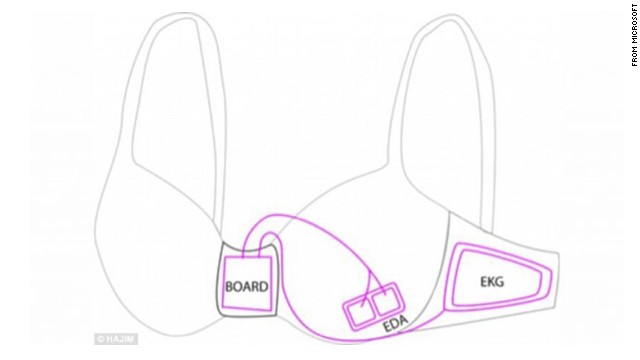
Microsoft developed a 'smart' bra

Microsoft researchers are developing a bra with sensors that could monitor a woman's emotional state to combat overeating.

(CNN) -- It's no longer enough to have smartphones, smartwatches, smart TVs and smart cars. Now a tech company is bringing artificial intelligence to lingerie.
Researchers at Microsoft have developed a prototype of a "smart bra" embedded with physiological sensors that seek to monitor a woman's heart activity to track her emotional moods and combat overeating. The sensors can signal the wearer's smartphone, which then flash a warning message to help her step away from the fridge and make better diet decisions.
The company says it has no plans to make the bra into a commercial product, however.
So -- why a bra, exactly?
"First, we needed a form factor that would be comfortable when worn for long durations," said scientists in a research paper published online. "The bra form factor was ideal because it allowed us to collect (electrocardiogram data) near the heart."
Research has shown that many people reach for calorie-rich foods like doughnuts when they're feeling stressed, bored, discouraged or on edge. There's a reason it's called comfort food.
For the research paper, scientists from Microsoft, the University of Rochester and the University of Southampton in the UK interviewed women who said that interventions -- being alerted to their emotional states -- helped them identify triggers for binge eating.
The researchers then conducted a study in which four women wore the sensors in their bras for four days to monitor their vital signs. An electrocardiogram (EKG) sensor under the arm measured their heart rate, while an electrodermal activity (EDA) sensor tracked their perspiration.
The researchers determined the bra was mostly effective in detecting its wearer's emotional changes. But the sensors needed to be recharged every three to four hours, which limited how long the bra could be worn. And more research would be needed before a smart brassiere -- Microsoft's Secret, anyone? -- ever became a viable product.
A Microsoft spokesperson downplayed the bra's significance in an e-mail to CNN.
"The bra sensing system is just one instance of a class of work from a group of Microsoft researchers that is focused on the broader topic of affective computing, or designing devices and services that are sensitive to people's moods and react accordingly," the spokesperson said.
"While we will continue our research in affective computing, Microsoft has no plans to develop a bra with sensors."
What about a similar undergarment for men? Researchers didn't rule it out.
"We will continue to explore how to build a robust, real-world system that stands up to everyday challenges with regards to battery life, comfortability, and being suitable for both men and women," the researchers said in the paper.
Reaction to the bra on Twitter ranged from amusement to annoyance.
"Anyone else offended that Microsoft is devoting its tech research to a bra designed to prevent women from overeating?" tweeted a Seattle woman whose Twitter handle is @cunningminx.
Added Rachel Happe of Boston, "If nothing else convinces you we need more women in tech, this should. No, I don't want someone hacking my bra..."

Nissan to build cars in Nigeria

Nissan Patrol 
Nissan will become the first global carmaker to build cars in Nigeria since west Africa’s largest economy rolled out a policy to tempt investors into its nascent automotive industry.
The Japanese carmaker, which has aggressively targeted growth in emerging markets as the centrepiece of its global strategy, plans to build 45,000 cars a year in the country, likely starting with an SUV early next year.

Nissan, which last month announced it would be the first international carmaker to build vehicles in Myanmar, targets a doubling of sales in Africa to 220,000 by 2016.
Nigeria, which imports millions of dollars worth of new and used cars into the country every year, has embarked on a drive to attract manufacturing and industrial investments into the country since former Goldman Sachs banker Olusegun Aganga was made minister of trade and investment this year.
While it is sub-Saharan Africa’s biggest recipient of foreign investment with roughly $7bn last year, or about 14 per cent of the region’s total, investors complain that Nigeria remains a challenging destination for industrial ventures because of a lack of power supply, poor transport infrastructure and an unskilled labour force.
African countries, long overlooked by global carmakers, are seen as one of the last remaining untapped sources of growth for the industry, after heavy investments in recent decades in India, China and southeast Asia.
“Nissan is preparing to make Nigeria a significant manufacturing hub in Africa,” said chief executive Carlos Ghosn, the global car industry’s most prominent believer in emerging market potential. “As the first-mover in Nigeria, we are positioned for the long-term growth of this market and across the broader continent.”
The UN Conference on Trade and Development puts Nigeria as the fourth-best destination for foreign direct investment when measured by returns, only behind Angola, Bahrain and Kyrgyzstan. Unctad estimates that FDI projects returned on average 36 per cent in Nigeria in 2011, compared with an average for emerging markets of 8.4 per cent.
Volkswagen and Peugeot previously built cars in Nigeria but have since closed factories.
The global alliance between Nissan and French partner Renault signed a memorandum of understanding with Nigerian company Stallion Group to begin vehicle assembly in Lagos, the alliance said on Wednesday.
Renault is mulling the possibility of joining Nissan in building cars in the country, a spokesman for the alliance said.
The entry is the first since Nigeria’s government unveiled a new automotive industrial policy designed to encourage carmaking. The Japanese company will build cars, light duty trucks, pickups and vans in the country, it said.
It also has a factory in Morocco and in South Africa, where it will begin production of its relaunched low-cost Datsun cars by the end of next year.

Wednesday, 4 December 2013

This Technology Tags Your Photos Based on Relationships

Since 2010, Facebook has used facial recognition software to automatically tag your friends in photos. Now one researcher has come up with an algorithm that tags photos based on the relationships that people in images already have with each other.
The algorithm uses the name and location of existing photo tags to build a "relationship graph," where personal connections in the images are calculated. That makes it faster and more efficient at tagging pictures compared to what's currently used by sites such as Facebook and Flickr.
For example, if a father and daughter appear in tagged images consistently, untagged photos featuring them can be tagged automatically. If the daughter is in an image with both of her parents, but the father is untagged, the algorithm is able to recognize him based on their other images together.
University of Toronto engineering professor Parham Aarabi has been working on the technology since 2005. He emphasizes the advantages of the algorithm over Facebook's face-recognition photo tagging system.
"The goal of face recognition is to find or generate a new tag when there is none," Aarabi told Mashable. "By using the tag locations and generating a relationship graph, we are essentially extracting the meaning from photos without significant computational analysis — since we only analyze the name and location of a particular tag, not the pixels of the entire image."
Aarabi has not yet been in touch with Facebook or other photo sharing sites about the algorithm technology. It will be patented by the United States Patent and Trademark Office on Dec. 17.

Tuesday, 3 December 2013

Amazon Unveils Flying Delivery Drones on '60 Minutes'

Amazon founder and CEO Jeff Bezos is known for making big bets in the world of innovation, and on Sunday night on 60 Minutes he revealed what might be one of his biggest: product delivery by flying robot drones.
The service is called Amazon Prime Air and it's slated for rollout sometime in 2015, depending on FAA approval.
A video of how the service will work has already been posted to YouTube, showing the process of the package being taken from the warehouse floor and on to the front steps of the customer’s home. The idea is to have the drone deliver orders roughly 30 minutes after the customer hits the “buy” button on Amazon.com.
2amzndron09870df
Bezos was so excited about the news that he kept the details under wraps until just before the interview with the network began. According to the producers of 60 Minutes, before the unveiling, Bezos said, “If you can guess what it is, then... I will give you half my fortune and send you to Vegas with it.”
Reacting to the unveiling of the Amazon-branded drone, Bezos interviewer Charlie Rose said, “I had no idea what its purpose was at first glance… They actually look like something out of a Philip K. Dick novel.”
You can watch the entire interview on the 60 Minutes website.

Yahoo Buys Startup SkyPhrase to Improve Web Searches

Marissamayer
Yahoo announced on Monday it acquired startup SkyPhrase to make finding what you want online easier, without using disjointed words and phrases in the search form.
The company said via a blog post SkyPhrase will be joining its Yahoo Labs team in New York. The four-person startup gained popularity earlier this year for its software that turns inquiries written in natural language into something the database understands.

The platform will allow Yahoo web users to get more personalized search results when entering various queries, such as "Find an American Airlines flight next week from New York to Los Angeles."
"In Yahoo, we have found a company that not only shares our vision, but delivers a rich collection of information and services to a massive user base. We are excited to join Yahoo Labs to continue to work on our shared vision of making computers deeply understand people's natural language and intentions," SKyPhrase said in a statement. "We can’t wait to take things to the next level together."
Yahoo hasn't revealed financial details related to the deal.
SkyPhrase joins the long list of startups acquired this year by Yahoo, from Tumblr to app maker Lexity and media aggregator Summly.

10 Excellent Platforms for Building Mobile Apps

Mobile-app-builders
If you've ever wanted to build an app for your business, blog, product or service, but the heavy investment of both time and money put you off, you're not alone.
The good news is that entering the mobile market no longer necessarily requires thousands of dollars and months of work. There are many mobile platforms available to help you build an app on a budget — quickly, and with no coding knowledge required.
With a small investment, you can create and manage your mobile site or application using one of the platforms listed below, and start reaping the advantages of offering your customers a dedicated mobile experience, including increased awareness, engagement and revenue.
  • 1. Appery

    1-appery
    Appery is a cloud-based mobile app builder that you can use to create apps for Android, iOS and Windows Phone, and includes Apache Cordova (Phone Gap) with access to its built-in components.
    Since the builder runs in the cloud, there's nothing to install or download, and it's easy to get started quickly. It includes a visual editor using drag and drop components to build the UI. You can connect to any REST API and use it in your app, and instantly add a cloud database and backend to your app if you need to store data.
    You can add powerful functionality with the Appery plugin catalog, or create your own custom private plugins to use in your apps. Collaboration is simple, allowing you to share your mobile project with development teams, business users and customers in real time.
    Price: Plans start at Free and go up to $180 per month for Premium
    Image: Appery
  • 2. Mobile Roadie

    2-mobileroadie
    Mobile Roadie is an app creator that allows anyone to create and manage their own iOS or Android app. The platform supports all media types, with automatic importing of RSS, Twitter or Google News keywords, and an auto-refreshing fan wall through which users can chat with each other in real time.
    You can use the free Mobile Roadie Connect app to preview your app accurately, just as your users would on their devices. The app also guides you through the submission process, with Mobile Roadie checking the quality and appropriateness of your content.
    You can push content straight to your app and pull content from it to your own site or blog. The API is language agnostic, so you can pull data in a variety of formats, including XML, JSON, PHP, CSV and HTML. You can easily craft a custom look and feel for your app and apply that to all platforms, and use the suite of marketing tools once your app is launched.
    Price: Plans start at $125 per month (Core) and go up to $667 per month (Pro).
    Image: Mobile Roadie
  • 3. TheAppBuilder

    3-appbuilder
    TheAppBuilder provides a suite of apps to suit employees, clients, events and brochures, with two different approaches available. You can build the app using the online toolkit, and either the training provided or TheAppBuilder itself will work with you to define and build the structure of the app and populate it with initial content.
    Using the dedicated AppLibrary, you can provide your users with a window into multiple apps and even customize it with your own branding. You can protect both public and private apps with usernames and passwords, and distribute them via the app store, making use of TheAppBuilder's Active Directory integration to enable login with existing credentials and user groups.
    Updating the structure and content of your apps is easy, even after you go live, because you can make unlimited updates and publish on multiple mobile platforms in one click. The platform supports native iPhone, iPad and Android, with updates going live within 60 seconds of submitting a change.
    Price: Pricing available upon request
    Image: TheAppBuilder
  • 4. Good Barber

    4-goodbarber
    Good Barber provides a platform to build iPhone and Android apps, allowing you to take control of every detail of your app without producing a single line of code. Nine colorful, highly customizable design templates are available to get started, with 350 beautiful icons and access to over 600 Google Fonts.
    Along with native iPhone and Android apps, you have a free web mobile version, which users access from their phones' browsers. You can also link this to your domain name, if you want it to become the official mobile version of your website.
    You receive immediate visual feedback every time you adjust any parameters in your app. Send unique, actionable push notifications and convert your readers into contributors by letting them submit articles, photos and videos. You can also organize your app and add sections ranging from videos, photos, sounds, live events and more.
    Price: Plans start at $16 per month and go up to $32 per month for the Full Plan
    Image: Good Barber
  • 5. Appy Pie

    5-appypie
    Appy Pie is a cloud-based DIY mobile app creation tool that allows users without programming skills to create an app for Windows, Android and iOS, and publish it to Google Play or iTunes. There's nothing to install or download -- just drag and drop pages to create your own mobile app online. Once it's complete, you receive an HTML5-based hybrid app that works with all platforms, including Blackberry. All revisions are in real time, with the ability to send push notifications, monetize with ads, see live analytics, and track location with GPS. You can also integrate social media feeds, blogs, websites, audio, radio and more.
    The appointment scheduler is especially useful for businesses such as Doctors, Salons or Spas with contact features such as one touch call, QR codes included. Using the code page you can embed custom code and embed iframes.
    Price: Plans start at Free and go up to $33 per month for Platinum
    Image: Appy Pie
  • 6. AppMachine

    6-appmachine
    AppMachine is an easy-to-use platform to build and design professional native apps for both iOS and Android. Using the drag-and-drop interface, you can combine different building blocks that offer a variety of features, such as information, photos and video. The building blocks also let you link your app to Facebook, Twitter, or online stores. You can design the app in your own unique style and choose your navigation paths, colors, fonts and icons, taking complete control of layout and watching your progress using the Previewer.
    Test your app as you build it and check its progress on your computer, mobile or tablet. Once your app is fully tested and ready to go, you can publish and promote your app, and analyze the user data. AppMachine takes care of everything you need to get your app into Apple's App Store and Google Play.
    Price: Plans are one-time fee only, and start at $499 (Gorgeous) and go up to $899 (Designer). A $1299 option (Developer) will be available soon.
    Image: AppMachine
  • 7. GameSalad

    7-gamesalad
    GameSalad allows you to create and publish games for a variety of platforms, including iOS, Android, HTML5 and OS X. Its drag-and-drop interface allows you to get started quickly, without the need for any programming knowledge.
    The game creator features a scene and actor editor, where you spend most of your game creation time, setting up actors in a scene and creating attributes, images, sounds and navigating between actors. The active community forum is a huge plus, with access to help and advice from fellow independent game designers.
    GameSalad recently teamed up with Amazon to offer access to development options specifically optimized for the Kindle Fire platform, including drag-and-drop integration with in-app purchase and GameCircle APIs.
    Price: Plans start at Free and go up to $299 per year for Pro
    Image: GameSalad
  • 8. BiznessApps

    8-biznessapps
    BiznessApps provides a platform to help create mobile apps for businesses a very simple process. It provides a wealth of features, including food ordering, shopping cart, loyalty programs, dynamic content, third party integrations, push notifications, comprehensive analytics and more.
    The easy-to-use content management system allows you to create an app in minutes, and customize everything using pre-built designs or your own. There are also real-time previews to check your progress as you design and develop your app.
    You can instantly update your app online, and modify everything inside, without having to send your app for a lengthy update with Apple or Google. There are weekly webinars on how to build beautiful mobile apps using the BiznessApps platform, along with access to hundreds of tutorial articles, to help make the process even easier.
    Price: Plans start at $29 per month for mobile website and go up to $59 per month for mobile app
    Image: BiznessApps
  • 9. AppMakr

    9-appmakr
    AppMakr is a DIY app creation platform that lets anyone craft iOS, Android and HTML5 apps, with no coding knowledge required. It was founded in 2009, and recently acquired by Infinite Monkeys, to now form one of the largest DIY app publishing platforms worldwide.
    You can make as many apps as you want, with unlimited updates, and utilize a number of features, including push notifications, high resolution photo galleries, live updates, music and video streaming, chat rooms, Google Maps integration, shared events calendars, in-app shopping, and much more.
    You keep track of all your apps through the Dashboard, easily customize your app's looks and functionality, add content with tabs, preview your app in real time and publish it to the markets with a single click.
    Price: Plans start at Free and go up to a $99 one-time fee for Self-Publish
    Image: AppMakr
  • 10. ShoutEm

    10-shoutem
    ShoutEm offers an app builder with complete content management, powerful user engagement tools and monetization options, coupled with a seamless publishing process, to provide a robust solution for most requirements. The interface builder offers many customization options, and each app can be tightly integrated with existing content sources such as WordPress, Foursquare, Facebook, Twitter, SoundCloud and more. The multiple monetization options means you can quickly create a revenue stream from your app, providing an e-commerce experience, in-app subscriptions, deals and coupons, with support for all major ad networks included.
    You can publish your apps under your developer account to both iTunes and Google Play, and update your app or content in real-time. ShoutEm also offers regular auto-updates, to ensure your app is always ahead of new iOS and Android updates.
    Price: Plans start at $19.90 per month and go up to $119.90 per month for Unlimited

Friday, 29 November 2013

Facebook Will Let You Save Links to Read Later

159539865
Mark Zuckerberg has described his social network as a "personalized newspaper" — and for seasoned users with a wide-range of like-minded friends, it's hard not to argue that the articles that pop up in your news feed constitute the most engrossing read in the world, if not exactly the most timely one.
But Zuckerberg also knows you could be reading Facebook more in any given day. What about those times when you're just skimming the app during a spare minute? What if you don't have time to read any of those fascinating links?
If you've ever gone hunting through your feed for an article you saw earlier, you'll welcome the news that Facebook appears to be testing a "save for later" feature. This isn't the first time the company has tested the idea, but it does appear to be more advanced and closer to wide release.
The concept first cropped up on a version of the Facebook app for iPhone and iPad in 2012. In that iteration, you held your finger on a story to save it to a separate list. Now, according to the blog MyTechSkool, which first spotted it, users will see a button with a bookmark icon they can press.
This is what apps such as Instapaper, Pocket and Read It Later have been doing for years, of course. The Apple browser, Safari, added a similar feature called Reading List (available on mobile in iOS6 and on the desktop with Mac OS X Mavericks).
But the Facebook feature differs in significant ways. First of all, you can save more than just articles — in theory, you'll be able to set aside anything from your cousin's holiday snaps to a change in your secret crush's relationship status. Call it a social To Do list.
Secondly, it allows you to do your later reading within Facebook — meaning Zuckerberg gets to monitor and monetize ever more of your reading behavior. What we don't know yet: whether you'll be able to read those articles, links and saved social snippets when you're offline.
We've reached out to Facebook to find out when the company intends to roll this out to all users. In the meantime, let us know in the comments below whether you see the Saved feature yet.

-Mashable

Everything You Need to Know About Gmail's Latest Update

Gmail
Gmail had a little work done lately, and it's looking good.
The latest version of the web's favorite email client comes with a host of new features, ready to help you reach Inbox Zero. But with new updates rolling out every month or so, it's hard to keep track of the latest tools. Just when you think you know it all, one little change can completely impact your whole experience.
We've rounded up the latest features so you can reclaim your title as Gmail Master. Here's the definitive guide to the latest updates.

1. Download Attachments to Google Drive

A major change, new Gmail revamped its attachment UI. Instead of downloading attachments to your desktop's Downloads folder — and honestly, who knows what you've lost in that mess — you now have the option to save everything straight to Google Drive. You can even send the download to a specific folder within Drive.
Now save email attachments straight to Google Drive.
Image: Google You can also preview multiple attachments easily within Gmail, read whole documents, or even search for a specific word or phrase within a convenient popup window.
You can now easily preview documents in Gmail.
Image: Google

2. A Little Less Conversation, a Little More Action

Another change to the Gmail interface is the new action buttons feature. These buttons appear in your Inbox to the right of email subjects. They scan the contents of your emails for pertinent information, such as dates or flight information, so you can complete tasks, for example, reviewing your Seamless orders, booking reservations or checking flights without having to even open the email.
Gmail Action Buttons make it easy to complete tasks without opening an email.
Image: Google Google stresses that the action buttons do not inherently share personal information and will only link with services that you've already connected to your Gmail account.

3. Nothing Like a Handwritten Note

Although Google products support a wide range of languages, if you're constantly switching between different alphabets, the keyboard can be a pain. Now you can write out characters in your own hand using your mouse or trackpad, to be converted into text using Google's new input tools.
Inputting special characters is easier than ever with Google's new input tools.
Image: Google With over 20 languages currently available in Google Docs and 50 languages in Gmail, your message is sure to translate.

4. A New Home for Your Apps

All your Google applications got a new home in the upper right-hand corner of your inbox. Simply click the apps icon to easily access your Drive, Calendar, Google+, Contacts and Groups. From here, you can also access your Google+ profile, any other Gmail accounts you're logged into (by clicking on your picture icon) or just your Google+ notifications, by clicking on the bell.
All of your Google Applications can easily be accessed at the click of a button.
Image: Google

5. Updated iPad Look

For iPad users, the latest Gmail for iOS app just got a major overhaul, giving you more room for serious multitasking. Holding your iPad in landscape mode gives you a new navigation bar on the left-hand side, where you can switch between the new inbox categories (or your other Gmail accounts) with one tap.
The new Gmail for iPad app gives a new left hand navigation bar.
Portrait mode has also changed, giving you a closer look at each individual message by isolating it on the page in it's own full-screen view. That also means more room to compose new messages. You can download the latest version of the iOS app now from the App Store.

6. A Sleeker Login

While not the most dramatic of changes, Google has started rolling out a new design for its login page, putting the login form front and center and eliminating everything else on the page.
New Gmail Login is sleek and to the point.
Image: Google The new login page is similar to the mobile login page and emphasizes how many tools a user gets with a single login.

-Mashable

Monday, 25 November 2013

Kano Computer Kit Lets Anyone Build a PC From Scratch


If you grew up tinkering with building kits like Erector sets or Lego Mindstorms, you can probably appreciate how important such tools can be to a child’s early development.
Now, a Kickstarter team has created something similar that enables kids and adults alike to learn more about computers.
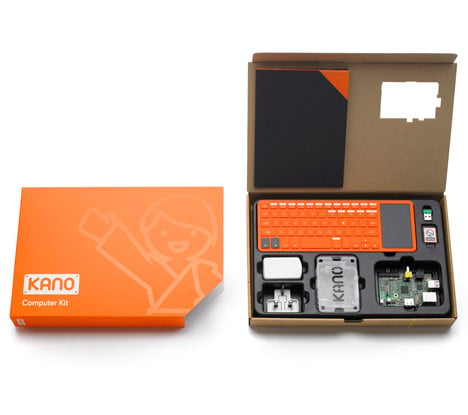
Kano is a computer kit designed to help people of all ages assemble a computer from scratch, and learn basic coding skills.
Powered by a Raspberry Pi computing module, the kit includes two instruction manuals, a custom case, an 8GB SD card, a keyboard, a speaker, a power plug, and HDMI and mini-USB cables.
For the kit's coding component, the team developed Kano OS, a distribution of Debian Linux, as well as Kano Blocks, a visual programming dynamic that allows users to develop with code blocks and then output the results in Javascript or Python for use in game programming or other areas.
The project began with a simple, Lego- and manga-inspired book last year. For its name, the team took on the moniker of famed Japanese judo instructor, Kano Jigoro, as a nod to his role as a dedicated teacher.
Launched as a Kickstarter project with the goal of securing $100,000 in funding, the project has already raised more than $580,000 at the time of this writing.
The kit, which costs $119, is scheduled to ship worldwide in July 2014.

-Mashable

Honey Bees Trained to Detect Cancer on Patients' Breath


Doctors have long treated patients for exceptionally bad bee stings, but now, it looks like the insects may be helping the field of medicine.
New research from Inscentinel, a UK-based firm specializing in insect research, suggests that honey bees can be trained to detect certain early-stage cancers in humans.
Using this breakthrough, Portuguese designer Susana Soares has developed a glass device for diagnosis using honey bees and a patient's breath.
Thanks to their super-sensitive sense of smell, bees can detect odors that a human nose can't, Soares explains on her website. Biomarkers associated with tuberculosis, lung cancer, skin cancer and diabetes, which can all be detected through smell, are present on a patient's breath.
Soares designed a glass objects with two enclosures: a small chamber that the patient breathes into and a larger chamber where trained bees are kept. If the bees detect the odor they where trained to pinpoint - in this case that of disease biomarkers - they'll rush into the smaller chamber where the breath is.
The cancer-detecting bees are trained by exposing the insects to the smell, then feeding them sugar, so they associate the odor with a food reward.
Soares says that properly trained bees are "very accurate" in early medical diagnosis.

Tuesday, 19 November 2013

Facebook Messenger App Upgrade Available to All iOS, Android Users

Messenger-app-3
The Facebook Messenger app update the company announced in late October is now available to all iOS and Android mobile users.
The update was originally rolled out to a small group of Android users only.
The most notable update to the app allows users to message anyone in their contacts who has the Messenger app, not just those they are Facebook friends with. The speed of messages also improved, meaning the app works much more like SMS or texting than it did before, said Peter Martinazzi, the Messenger product manager at Facebook.
The new versions of the app were also built specifically for Android and iOS operating systems, meaning the icons, color schemes, and layouts were designed to feel more natural on each OS, said Martinazzi.

-Mashable

Monday, 18 November 2013

BBM app now available for iPad and iPod

After conquering the hearts of many iPhone and Android phone users, the BlackBerry Messenger (BBM) app is now targeting as iPad and iPod owners as potential users.
 
In a blog post, BlackBerry said its update to the iOS app now has support for the iPad tablet and iPod media player, so long as they can use WiFi.
 
BlackBerry also said a new update has rolled out for Android devices as well.
 
"In addition to several new features, bug fixes and performance improvements, we are also proud to deliver something you’ve been asking for: support for iPod and iPads!" it said. http://blogs.blackberry.com/2013/11/bbm-for-android-and-iphone-updates-now-available/
 
The features for the updated BBM app for iPhone include:
 
- Support for iPod and iPad devices running iOS6 and iOS7
- Improvements to right-to-left language support
- More options for sharing your BBM PIN Barcode
- Find your friends on other social networks who are also using BBM
- Fixes an issue where some users would be missing BBM contact names
 
Meanwhile, the new features for the updated Android app include:
 
- Support for BBM Contact Categories
- BBM Group List sorting and filtering improvements
- More options for sharing your BBM PIN Barcode
- Find your friends on other social networks who are also using BBM
- Addresses an issue where some users may have experienced higher battery use
 
BlackBerry also said the update introduces the new Share PIN option to make sharing a PIN Barcode even easier.
 
"Using this option you can quickly share your PIN Barcode across your favorite social network as well as other options provided by your device’s operating system," it said.
 
Another new feature is "Tell Your Friends," which lets a user see which of his or her friends on other social networks are also using BBM, so he or she can invite them to chat.
 
A separate article on TechHive.com said the updated app works on both Wi-Fi-only iPads and ones with cellular capability.
 
It added BBM's usage numbers show people may be interested in the app even if they do not own a BlackBerry device.
 
"Before BlackBerry Messenger rolled out to the iPhone and Android-based devices, it had 60 million users, and now it has 80 million, BlackBerry said," it added. — KDM, GMA News

Google Announces New Measures Against Child Pornography

Eric-schmidt
Google's executive chairman Eric Schmidt has announced the company will start to globally block links to child pornography material within the next six months.
In an op-ed in British newspaper Daily Mail, Schmidt said Google has assembled a team of more than 200 experts working on new technology to address this problem. As a result, Google will prevent links to child sexual abuse material from appearing in search results. The company will also show warnings at the top of more than 13,000 search results, explaining that child sexual abuse is illegal and offering advice on where to get help.
Furthermore, a technology that identifies child sexual abuse videos on YouTube is undergoing testing right now.
These measures are currently live in English-speaking countries, but they will be expanded to the rest of the world, covering 158 other languages, within the next six months.
"While no algorithm is perfect – and Google cannot prevent paedophiles adding new images to the web – these changes have cleaned up the results for over 100,000 queries that might be related to the sexual abuse of kids," wrote Schmidt.
Schmidt still maintains that, when it comes to detection of child sexual abuse imagery, there is no easy technical solution that can help. Instead, a real person has to review the images, and those that are found to be illegal will be given a special digital fingerprint so Google's computers can identify them when they appear on its systems.
The move comes after a heated campaign for stopping child porn in Britain.
"Google and Microsoft have come a long way," UK Prime Minister David Cameron told Daily Mail. "A recent deterrence campaign from Google led to a 20 per cent drop off in people trying to find illegal content, so we know this sort of action will make a difference," he said.
Although he believes this is a move in "the right direction," Cameron wants an even bigger commitment from these companies.
"If the search engines are unable to deliver on their commitment to prevent child abuse material being returned from search terms used by paedophiles, I will bring forward legislation that will ensure it happens," he said.

-Mashable

TapTap Wristband Connects Couples With Wireless Vibrations

TapTap wristbands
Nowadays you can reach whomever you want through various modes — a Facebook message, a tweet, a text message and a phone call, just to name a few. These all require you to look at a screen in order to process what another person wants to communicate.
But now Woodenshark is offering a device called TapTap, a wristband meant to help people communicate without the need of a screen. Targeted toward people in a relationship, the wristband allows users to communicate through — you guessed it — taps. One user taps the wristband and the other feels the wristband vibrating as it relays those taps.
For $130, you get two wristbands, which can run up to seven days on one charge, according to the company. To use the wristband, you download an app and connect it to your email along with the email of the person wearing the other wristband.

The product works with Android smartphones with Bluetooth 2.1 and above, as well as the iPhone 4S and newer. The silicon wristband holds a plastic module in place, the brain of the TapTap, so to speak. A capacitive sensor and an accelerometer sense the taps. The bracelet also includes LED lights to alert you of any missed taps or a low battery.
Woodenshark's wristband also comes in variety of patterns. To change your look, you just take the module out of one wristband and place it into another.
Dmitry Gorilovsky, founder of Woodenshark, told Mashable that although the wristband primarily focuses on people in a romantic relationship, people have already proposed other uses. The company's Kickstarter campaign has helped the team consider some of the proposed alternative uses.
"People can create their own language," he said. "We are testing TapTap with our close circles like friends and family and some couples they use just two or three different ways of tapping each other with different meanings. Like, one tap 'I am missing you' and several taps in a row 'just take a look at your phone or check something, I'm writing.'"
TapTap wristband
The team is also working on configuring the TapTap to work with smart alarms and game controllers by using different apps on the smartphone. The focus, however, remains on interactions between two wristbands.
At the time of this writing, the team had raised $74,888 out of a $130,000 goal. The campaign ends Nov. 22.

Sunday, 17 November 2013

LG G2: A Better Smartphone Than the Samsung Galaxy S4

Show As List
Mashable Choice highlights the products and services we've tested and would recommend to others. Consider it Liked, Favorited, +1'ed and Pinned.
It's funny how quickly we get used to ergonomic paradigms. What I mean is, we quickly got used to a smartphone's On/Off button being on the top or right side with the volume button on the left side. Lord help the handset maker who screws with this time-honored six-year old smartphone button arrangement.
Well, Lord help LG, because it has moved all these keys from their usual perimeter positions to the rear of its latest superphone, the G2. In an age of Android androgyny, this shift is jarringly deliberate, designed to clearly differentiate the G2 from other Android superphones, specifically those from LG's mortal enemy, Samsung and its Galaxy S4.
Oddly, LG needn't have bothered with such an obvious ergonomic deviation. In nearly all everyday usability aspects, the G2 one-ups the Galaxy S4, including ease of calling, camera and battery life.

Rear vs. Side

LG's stated reason for moving the volume and On/Off toggle to a rear array under the camera lens is to make it more natural to raise and lower the volume of conversation while holding the G2 to your ear. And LG is correct — it’s a mite easier to manipulate the up/down buttons from this rear position — but not enough to overcome some of this arrangement's deficiencies.
For starters, the rear buttons makes it more awkward to wake up or put the G2 to sleep.
For starters, the rear buttons makes it more awkward to wake up or put the G2 to sleep. Because the on/off key is wedged between the up/down toggle, because of the G2's lack of a physical home button and because of the G2's girth, it's not as easy to quickly locate the sleep key by feel. And if you lay the phone on its back while a call is in progress or you're watching a video, you risk hitting the rear sleep key.
Instead of searching for and tapping the rear sleep key, you tap the G2 twice on its black blank screen to wake it up, then tap a blank space on one of the Home screens twice to put it to sleep. While this double-tapping works, it doesn't work all the time, and I often had to resort to locating and tapping the rear key. Having to tap the screen twice instead of a button once presents an unnecessary usage impediment.
Despite possessing a slightly larger screen than the Samsung Galaxy S4 (5.2 inches vs. 5 inches) and a slightly more copious battery (3,000 milliamp-hours vs. 2,600 mAh), the LG's chassis is barely larger (G2: 5.45 x 2.79 x 0.35 inches, GS4: 5.38 x 2.75 x 0.31 inches) and a hardly worth mentioning half-ounce heavier, 5.04 vs. 4.59 ounces.
Like all 5-inch smartphones, it's difficult to manipulate the G2 with one hand. For instance, the dial pad option on the call screen is in the upper left hand corner, making it nearly impossible to tab with your thumb while holding the G2 in your right hand.

Performance Comparison

Inside the G2 is a Qualcomm Snapdragon 800 quad-core 2.26GHz processor, technically superior to the GS4's Qualcomm Snapdragon 600 quad-core 1.9GHz brain. In side-by-side comparisons of everyday usage — web surfing and scrolling, checking email, watching videos, downloading apps and booting up — the LG G2 performed its primary functions with more alacrity and efficiency than the Galaxy S4, albeit only slightly.

Both phones have 2GB of RAM, but for the same price LG packs the G2 with 32GB of storage vs. 16GB for the GS4. But the G2 lacks the GS4's microSD card expandability.
While the GS4 is packed with many of Samsung's own specialized apps, widgets and features, LG has added three more useful everyday creature comforts:
Always-lit navigation keys: The backlight on the Back and Menu keys that straddle the physical Home button on the GS4 always fade out, fading them from your mind's muscle memory, too.
LG has included its Home, Back and Menu controls on the screen itself
LG has included its Home, Back and Menu controls on the screen itself, making them always lit and nearly always accessible. "Call" button as part of contact entry: Instead of having to tap a contact name to get to the phone number(s), the G2 includes the familiar green phone receiver icon for those contacts with phone numbers included. Just tap the green phone icon opposite the contact's name to initiate a call or, if there are multiple phone numbers associated with that contact, get a list of numbers to choose from.
Camera from lock screen: Like the iPhone, the G2 includes a Camera button on its lock screen; just slide up to activate the camera and grab your shot.

Screen Comparison

Making a decision between the G2 and the GS4 based on their screen quality depends on how much video you watch.
Both screens offer full HD (1,920 x 1,080) resolution. The G2 has an IPS (in-plane switching) LCD display with 423 pixels per inch vs. the negligibly greater 441 ppi on the GS4's Super AMOLED. The G2's slightly more generous screen real estate is negated by the inclusion of the Home, Back and Menu controls.
One issue with the GS4 and its AMOLED is a gray tint that discolors nearly every screen, especially pages with white backgrounds. As a result, colors are brighter and contrast is deeper on the G2 for nearly all activities.
But these advantages disappear when watching video (see pic below). Suddenly AMOLED advantages on the GS4 leap to the fore; colors are brighter and blacks deeper on the GS4, with a far wider viewing angle for multi-person watching.
LG G2 vs. Galaxy S4
So, for performing everyday smartphone functions, the G2's screen is superior. For video viewing, the GS4 display is tops.

Camera Comparison

Unlike the either/or screen comparison, there's no equivocation in judging the 13-megapixel cameras on each of these phones: The G2 packs the superior snapper.
As with all smartphone cameras, outdoors and sunny is child's play for both, although I found the G2 images contained slightly deeper colors and slightly more detail.
Indoors and/or dim is where the G2's photos excel. With the flash turned off and with optical image stabilization, the G2 focuses better, resulting in fewer blurry shots, with less grain, more color and more detail. It often took several tries to get a clean shot with the GS4 indoors (see sample below — the LG G2's image is on the left; GS4 on the right), while the G2 usually captured a crisp image on the first try.
LG G2 vs. Samsung Galaxy S4
With flash, the G2 doesn't bleach out subjects as blindingly as does the GS4. The G2's flash is more evenly distributed across the frame, producing a more accurate representation of the scene. Unfortunately, both phones take a nearly ridiculous five seconds to snap a flash photo.

Battery Comparison

Perhaps most importantly of all, G2's more copious battery supplies longer life.
While watching video, the G2 ran for 4.3 hours on a single charge, the GS4 barely 3.75 hours. When extrapolated, the G2 lasts deeper into a long day without requiring a recharge than the GS4.

Summary

For the same price or less, LG's G2 offers more storage and more screen real estate as well as superior performance, superior photos and superior navigation compared to Samsung's Galaxy S4.

The Lowdown

What's Good
  • Bright HD 5.2-inch screen
  • Excellent 13MP camera
  • Great battery life
What's Bad
  • No microSD card slot
  • So-so video viewing
  • Awkward to navigate one-handed
Bottom Line
In nearly all aspects of everyday usage — navigation, readability, processing, camera and battery — LG's G2 outperforms the more vaunted Samsung Galaxy S4.

-Mashable

Gamers line up by the thousands for PlayStation 4 launch

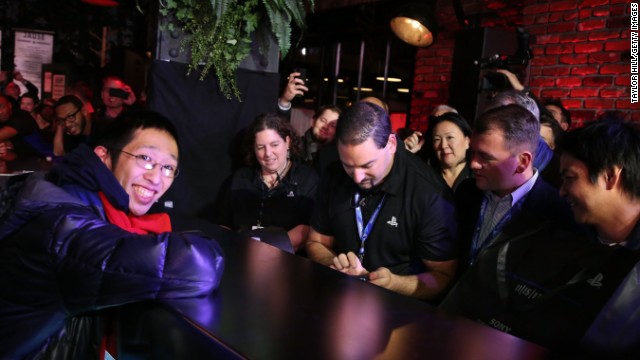
Joey Chiu, left, of Brooklyn, buys the first PlayStation 4 sold in North America at a launch event in New York City.
(CNN) -- The late-fall chill outside a Best Buy store in Elkridge, Maryland, wasn't all that was keeping George Nelums awake late Thursday.
"I've been a PS dude since the first PS," said Nelums, the first in line to pick up a PlayStation 4 when the clock struck midnight. "I'm not planning on sleeping tonight. I've got a 6-hour energy drink. I'm all set."
He and about 100 others were there for the next step in the evolution of home entertainment. The new PlayStation hit stores a week before Microsoft's Xbox One does the same, touching off a new round in the fight for the hearts of console gamers.
It was a scene that played out at thousands of stores across North America. In New York, Sony rented out the entire Standard High Line Hotel in Manhattan, where roughly 500 people showed up to watch a light show of video-game scenes as they waited for the midnight launch.
Matt and Tammy Nyers, of Laurel, Maryland, picked up their two new pre-ordered consoles at the Elkridge store -- one to keep and one they plan on selling on eBay. Matt said he's more of a sports gamer and really wants to see what next year's "Madden" will be like when it is designed specifically for the new console.
PlayStation 4 launch crucial for Sony
Exclusive: Sony has high hopes for PS4
See the Xbox One and PS 4 in action
Gamer: Microsoft U-turn sign of maturity
"It is the latest and greatest and I want to see what they can do," he said. "I'm really wanting to see what games will be coming out next because they will be built just for the PS4. This is built more like a gaming rig (than the PS3)."
The first new home console for Sony in more than seven years, the PlayStation 4 incorporates many new features over its predecessor, the PlayStation 3. Greater focus on social interaction during gameplay, a redesigned controller with a touchpad interface, and expansion of streaming entertainment choices are just a few of the new elements for PS4.
Andrew House, president and group CEO of Sony Entertainment, said building this next-generation console took nearly seven years and that Sony had specific goals in mind to reach today's launch date.
"Having a shared experience on the same sofa in front of the same screen is something that I, as a parent, want to have with my family," House told CNN during the PS4 launch event in New York City this week. "A device that is designed from the ground up to be able to serve up all those different kinds of experiences, but with a great user interface that's designed to work specifically in the living room, I think is still very, very important."
With more than a million pre-orders reported by Sony in August, it would seem the public was ready to get their hands on the latest next-generation console (Nintendo's Wii U was released last year).
Analysts expect the demand for the system to outstrip supply through Christmas.
"People were coming in early this week just to get games that were released and extra controllers," Brooks Holman, home sales manager at the Maryland Best Buy said. "They were making extra trips to the store just to make sure they had everything they wanted for when they got their new PS4."
Devin Gergen, Minnesota native, is one of many military personnel stationed in the area who spent hours outside the store. He hadn't pre-ordered, but remained hopeful
"I just like the experience of standing in line, meeting new people, sharing gamer tags," Gergen said. "You get to chat around with all kinds of people. It is fun."
The lines were predominately guys in their 20s and 30s, and some in line were hoping to score the perfect gift.
Delaney Lockhart, a 21-year-old college student attending Towson University, waited with her mother in the chilled night air. But Lockhart said she wasn't getting the PS4 for herself.
"I'm getting the game for my brother for Christmas," she said, laughing. "I'm a good sister. He owes me."
The excitement, though, didn't mean everything has gone perfectly for Sony's rollout.
Shuhei Yoshida, president of Sony's Worldwide Studios, tweeted that the company is investigating reports of broken consoles, but said the problem isn't widespread.
"Be assured we are investigating reported PS4 issues," he wrote on Twitter. "The number is very small compared to shipped, we believe they are isolated incidents."
Over the next few months, PlayStation 4 consoles will go on sale in other countries around the world, with the final launch date set for February in Japan.

-CNN